
Medicare doesn’t have to be complicated. Most people get or have Medicare Part’s A & B when they turn 65, unless they or a spouse are still working and are covered by an employer sponsored health insurance plan with 20 or more employees. In that case, they may just have Medicare Part A. Some people also can get Medicare before age 65 is they are considered disabled by Social Security.
When people are 65 or who are over 65 and are newly coming off of their or a spouse’s employer health insurance plan for a company with 20+ employees, the first thing they’ll want to do is apply for Medicare Part’s A (if they don’t already have it) and Part B.
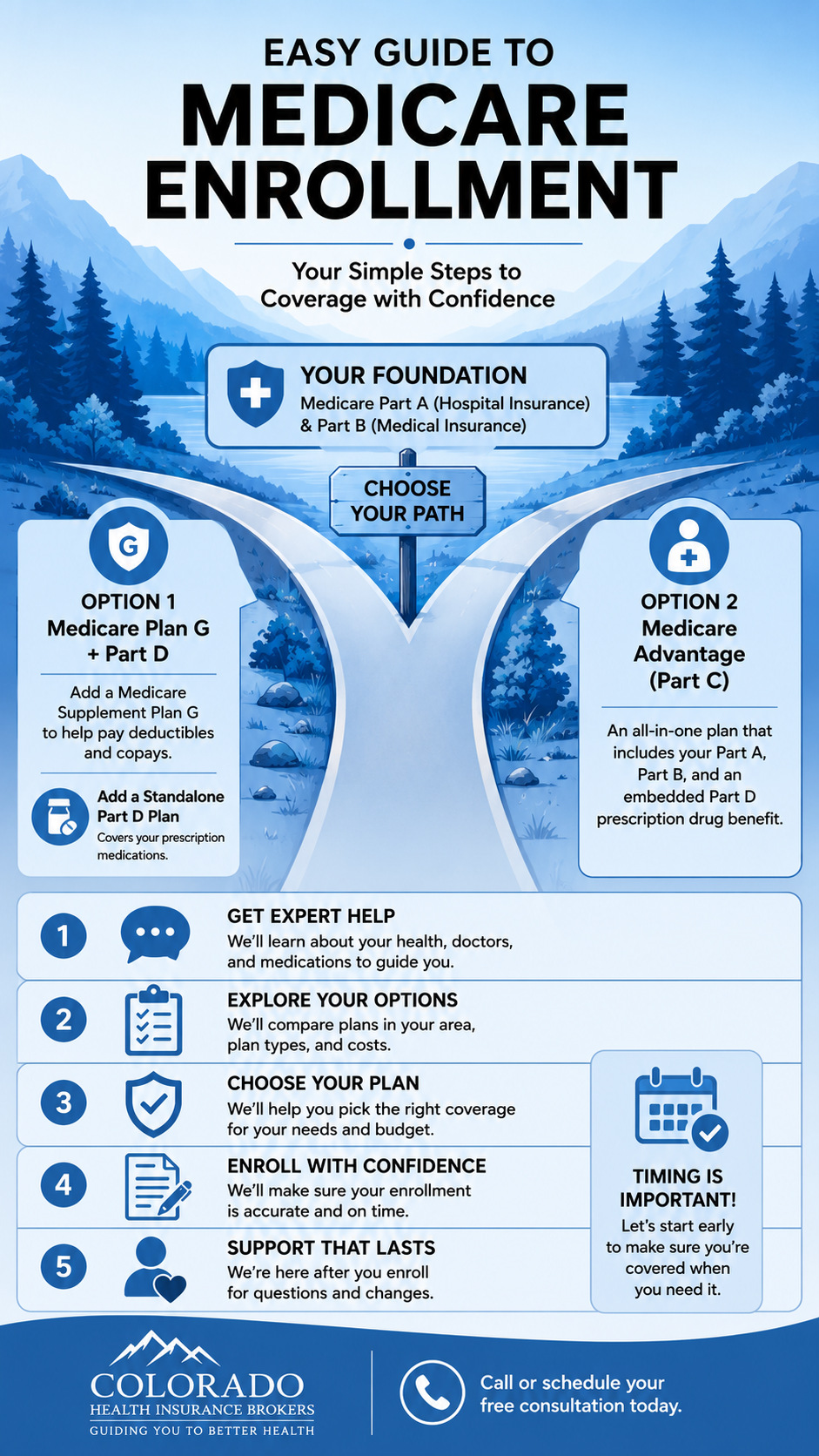 Once they have both Medicare Part’s A & B, they will most often choose either a Medicare Supplement and a stand alone Medicare Part D plan or they get a Medicare Advantage (Part C) plan with an embedded Medicare Part D benefit.
- Medicare Part A – Hospital Insurance (free for most people)
- Medicare Part B – Outpatient Insurance (monthly cost for most people)
- Medicare Part C – Medicare Part C, better known as Medicare Advantage plans, are heavily marketed by private insurance company insurance with premiums from $0 and up. Purchased in addition to Medicare Part’s A & C. Out of pocket maximums typically range from $3500 to $7500 or more. Many, but not all Medicare Advantage plans include Part D benefits.
- Medicare Part D – Medicare Part D prescription drug coverage for retail and mail order medications through private insurance companies. Medicare Part D is often, but always included in Medicare Part C or Medicare Advantage plans.
- Medicare Supplements – Standardized plans layered on top of Original Medicare Part’s A & B to give you access to all providers nationally who take Medicare. Plan G is the most common and comprehensive Medicare Supplement option currently available to new enrollees. Often called Medigap plans, Medicare Supplements cover much of what is not covered by Original Medicare, but do not include Medicare Part D.
Please note that you can have Medicare Advantage OR a Medicare Supplement, but not both at the same time. Visit the Medicare Supplement Vs. Medicare Advantage Decision Guide.
Want to know when you can enroll or change plans? Learn more about Medicare Enrollment Periods.
Or make it easy and let a licensed Broker help you better understand your options. Get personalized help applying for Medicare and information on your Medicare options.